Ditapis dengan
Categorization of Radioactive Sources | IAEA Safety Standards Series No. RS-G…
This Safety Guide provides a risk based ranking of radioactive sources and practices in five categories. The categorization system is based on a logical and transparent method that provides the flexibility for it to be applied in a wide range of circumstances. On the basis of this categorization, risk informed decisions can be made in a graded approach to the regulatory control of radioactive s…
Proceedings Series - Nuclear Security: Global Directions for the Future
The principal aim of the International Conference on Nuclear Security: Global Directions for the Future was to share information on how to most successfully combat sub-State and criminal threats now and in the future, and to foster a better understanding and awareness of the global changes since 11 September 2001. The conference considered the threat of malicious acts involving nuclear and othe…
Disposal of Waste from the Cleanup of Large Areas Contaminated as a Result of…
This book consist : Introduction; Purpose; Scope; Waste characteristics and quantities; Treatment of wastes; Scenarios for the tranportation and disposal of wastes; Loading and transportation of large volumes of waste; Disposal of large volumes of waste; Disposal facility operation closure and surveillance; Review of operational experience; Radiation protection and safety plan; and Conclusions.…

PREVENTIVE AND PROTECTIVE MEASURES AGAINST INSIDER THREATS (e-book)
This implementing guide presents a comprehensive methodology for the development of preventive and protective measures against insider threats to nuclear facilities and nuclear material transport operations of all types. Institutional insiders who are privy to the inner workings of security systems present a unique challenge to the establishment of effective control systems for nuclear material…
IAEA - Safety Standards Series No. GSR Part 5 : PREDISPOSAL MANAGEMENT OF RAD…
This Safety Requirements publication applies to the predisposal management of radioactive waste of all types and covers all the steps in its management from its generation up to its disposal, including its processing (pretreatment, treatment and conditioning), storage and transport. Such waste may arise from the commissioning, operation and decommissioning of nuclear facilities; the use of radi…
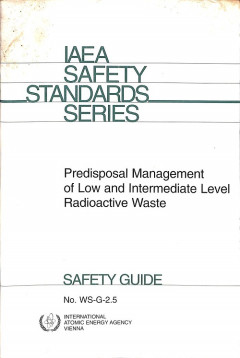
Predisposal Management of Low and Intermediate Level Radioactive Waste, Safet…
This book consist : Introduction; Protection of human health and the environment; Roles and responsibilities; General safety considerations; Safety features for the predisposal management of LILW; Record keeping and reporting; Safety assessment; and Quality assurance. (Jml)
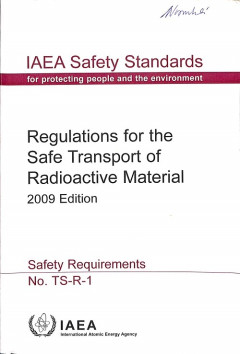
Regulations for the Safe Transport of Radioactive Material, 2009 Edition, Saf…
This book consist : Section I. Introduction; Section II. Definitions; Section III. General provisions; Section IV. Activity limits and classifications; Section V. Requirements and controls for transport; Section VI. Requirements for radioactive materials and for packagings and packagaes; Section VII. Tes procedures; and Section VIII. Approval and administrative requirements. (Jml)
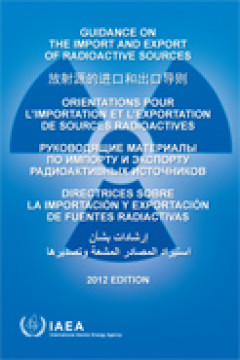
Guidance on the Import and Export of Radioactive Sources, 2012 Edition
During meetings on the development and approval of the non-legally binding Code of Conduct on the Safety and Security of Radioactive Sources (hereinafter referred to as the Code), some Member States requested guidance on implementing the Code, particularly in relation to the import and export of radioactive sources. Therefore, this non-legally binding Guidance was developed in 2004 by Member St…

Categorization of Radioactive Sources | IAEA Safety Standards Series No. RS-G…
This Safety Guide provides a risk based ranking of radioactive sources and practices in five categories. The categorization system is based on a logical and transparent method that provides the flexibility for it to be applied in a wide range of circumstances. On the basis of this categorization, risk informed decisions can be made in a graded approach to the regulatory control of radioactive s…
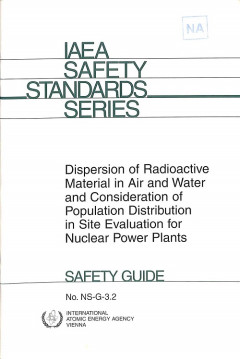
Dispersion of Radioactive Material in Air and Water and Consideration of Popu…
This book consist : Introduction; Transport and diffusion of effluents discharged into the atmosphere; Transport and diffusion of effluents discharged into the hydrosphere; Uses of land and water in the region of the site; Population distribution; Consideration of the feasibility of an emergency plan; and Quality assurance programme. (Jml)
 Karya Umum
  Filsafat
  Agama
Agama  Ilmu-ilmu Sosial
  Bahasa
  Ilmu-ilmu Murni
  Ilmu-ilmu Terapan
  Kesenian, Hiburan, dan Olahraga
  Kesusastraan
  Geografi dan Sejarah