Ditapis dengan
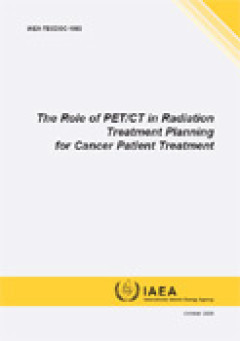
The Role of PET/CT in Radiation Treatment Planning for Cancer Patient Treatme…
This publication is a resource for specialists in nuclear medicine and radiation oncology on the coupling of positron emission tomography and X ray computed tomography (PET/CT) to more accurately identify cancer cells within the body. Besides, although radiation therapy plays an important role in cancer treatment as an effective non-invasive therapy, damage to normal cells in the vicinity of tu…
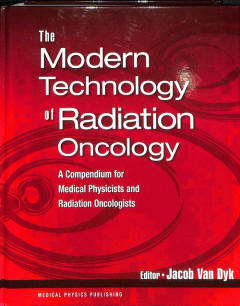
The Modern Technology of Radiation Oncology: A Compendium for Medical Physici…
Details technology associated with radiation oncology, emphasizing design of all equipment allied with radiation treatment. Describes procedures required to implement equipment in clinical service, covering needs assessment, purchase, acceptance, and commissioning, and explains quality assurance issues. Also addresses less common and evolving technologies. For medical physicists and radiation o…
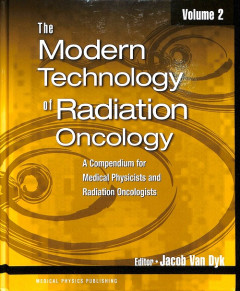
The Modern Technology of Radiation Oncology: A Compendium for Medical Physici…
The purpose of this book is to describe the details of the technology associated with radiation oncology, A special emphasis is placed on the design of all the equipment allied emphasizing design of all equipment allied with radiation treatment. In addition, this book describes the procedures that are required to implement this equipment into clinical service (needs assessment, purchase, accept…
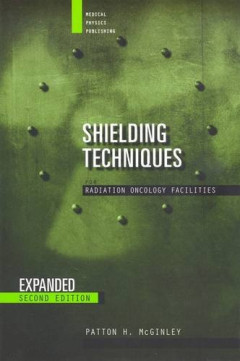
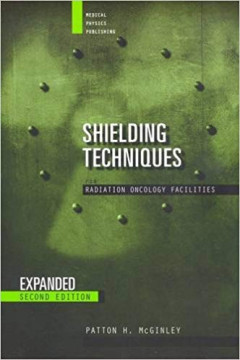
Shielding Techniques for Radiation Oncology Facilities
A textbook for a senior or graduate course in medical or health physics. Students are assumed to be familiar with the radiation-producing devices used in radiation oncology. The second volume corrects some errors detected in the 1998 first, and adds discussions of intensity modulated radiation therapy, CT room design, the design of direct shielded doors, and other topics. Annotation c. Book New…
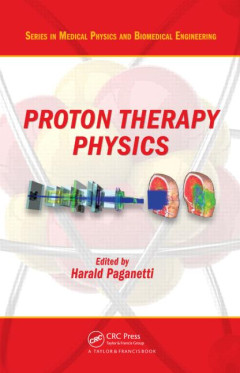
Proton Therapy Physics
Proton Therapy Physics goes beyond current books on proton therapy to provide an in-depth overview of the physics aspects of this radiation therapy modality, eliminating the need to dig through information scattered in the medical physics literature. After tracing the history of proton therapy, the book summarizes the atomic and nuclear physics background necessary for understanding proton i…
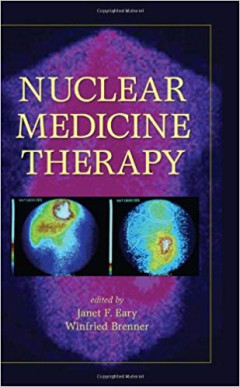
Nuclear Medicine Therapy
This book is about nuclear medicine therapy. As we know, currently nuclear medicine continues to develop and is very useful for the world of health. The main discussion in this book consists of 10 chapters written by many contributors according to the experts in their field. One of the topics discussed is about iodine-131 radiotherapy, radioimmuntherapy of solid tumors and radioimmuntherapy of …
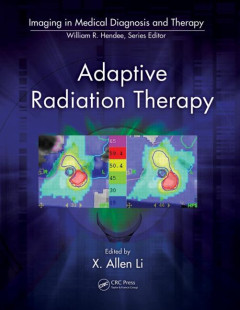
Adaptive Radiation Therapy
Modern medical imaging and radiation therapy technologies are so complex and computer driven that it is difficult for physicians and technologists to know exactly what is happening at the point-of-care. Medical physicists responsible for filling this gap in knowledge must stay abreast of the latest advances at the intersection of medical imaging and radiation therapy. This book provides medical…
The Modern Technology of Radiation Oncology: A Compendium for Medical Physici…
The purpose of this book is to describe the details of the technology associated with radiation oncology, A special emphasis is placed on the design of all the equipment allied emphasizing design of all equipment allied with radiation treatment. In addition, this book describes the procedures that are required to implement this equipment into clinical service (needs assessment, purchase, accept…
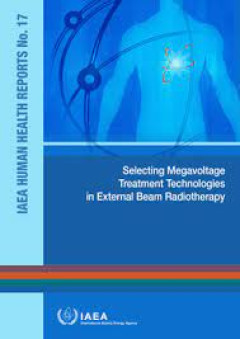
Selecting Megavoltage Treatment Technologies in External Beam Radiotherapy-IA…
Radiotherapy is one of the major treatment modalities for cancer, along with surgery and chemotherapy. It has been shown to be cost effective in many countries, including in low and middle income countries (LMICs) [1, 2]. Depending on the predominance of specific cancers in the geographic region in question, approximately 40–60% of all cancer patients can benefit from radiotherapy [3–6]. …
 Karya Umum
 Filsafat
 Agama
 Ilmu-ilmu Sosial
 Bahasa
 Ilmu-ilmu Murni
 Ilmu-ilmu Terapan
 Kesenian, Hiburan, dan Olahraga
 Kesusastraan
 Geografi dan Sejarah