Ditapis dengan

Environmental Impact Assessment of Recycled Wastes on Surface and Ground Wate…
The state of the art of the impact assessment of recycled hazardous waste materials on surface and ground waters is presented. The topics include chemodynamics, toxicology, modeling and information systems. Due to the wealth of information on this topic, the texts of T. Kassim (ed.): Environmental Impact Assessment of Recycled Wastes on Surface and Ground Waters are published in three separa…
Implications of Partitioning and Transmutation in Radioactive Waste Management
This book consist : Introduction; Potential impact of partitioning and transmutation on radioactive waste management; Non-proliferation aspects of partitioning and transmutation; Fuel cycles; Partitioning; Transmutation; Additional waste management considerations; Conclusions; and Recommendations to decision makers. (Jml)
Research Reactor Utilization, Safety, Decommissioning, Fuel and Waste Managem…
Proceedings contains material Conference summary; Opening session; Research reactor safety (Session 1); Research reactor utilization (Session 2); Research reactor decommissioning and waste management (Session 3); and Fuel management (Session 4). (Jml)
Disposal of Low Activity Radioactive Waste: Proceedings of an International S…
Proceedings contains material Executive summary; Opening session; Policies and strategies for low activity radioactive waste management and disposal (Session 1); Very low level radioactive waste (VLLW) (Session 2); Panel; Low activity radioactive waste from decommissioning (Session 3); Panel; Long lived low activity radioactive waste/other materials (Session 4); Panel; Unique low activity waste…


Site Assessment and Remediation Handbook, Second Edition
This book is the result of many years of trying to evaluate the physical reality of ground-water flow in geologie materials. This text concentrates on practical aspects of hydrogeology and was designed as a working tool to be used to evaluate the heterogeneities of subsurface units. The key to understanding the conceptual basis of a particular geologic environment is building the geologic model…
Stabilization and Solidification of Hazardous, Radioactive, and Mixed Wastes
The development of stabilization and solidification techniques in the field of waste treatment reflects the efforts to better protect human health and the environment with modern advances in materials and technology. Stabilization and Solidification of Hazardous, Radioactive, and Mixed Wastes provides comprehensive information including case studies, selection criteria, and regulatory considera…

Accident Analysis for Nuclear Power Plants with Graphite Moderated Boiling Wa…
This book consist : Introduction; Structural characteristics of RBMKs; Classification of initiating events; Acceptance criteria; Requirements for analysis; Selection of initial and boundary; Discussion of events; and Presentation of results. (Jml)
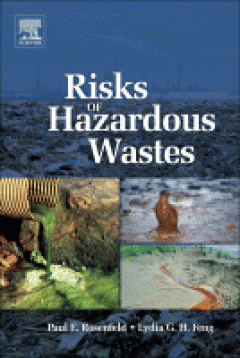
Risks of Hazardous Wastes
Hazardous waste in the environment is one of the most difficult challenges facing our society. The purpose of this book is to provide a background of the many aspects of hazardous waste, from its sources to its consequences, focusing on the risks posed to human health and the environment. It explains the legislation and regulations surrounding hazardous waste; however, the scope of the book is …
 Karya Umum
 Filsafat
 Agama
 Ilmu-ilmu Sosial
 Bahasa
 Ilmu-ilmu Murni
 Ilmu-ilmu Terapan
 Kesenian, Hiburan, dan Olahraga
 Kesusastraan
 Geografi dan Sejarah