Ditapis dengan
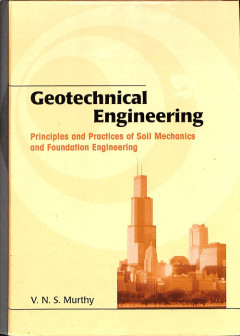
Geotechnical Engineering: Principles and Practices of Soil Mechanics and Foun…
This book consist 21 chapters that Introduction; Soil formation and characterization; Soil phase relationships, index properties and classification; Soil permeability and seepage; Effective stress and pore water pressure; Stress distribution in soils due to surface loads; Compressibility and consolidation; Shear strength of soil; Soil exploration; Stability of slopes; Lateral earth pressure; Sh…

Methodologies for Seismic Soil–Structure Interaction Analysis in the Design…
The response of a nuclear installation’s structure during an earthquake depends on the characteristics of the ground motion, the surrounding soil and the structure itself. Soil– structure interaction (SSI) analysis is used to evaluate the effects of seismic ground motion on an installation’s structure, system and components, to ensure it is designed to withstand the effects of earthquakes…

Heavy Metals in the Environment: Origin, Interaction and Remediation
Excessive levels of heavy metals can be introduced into the environment, for example, by industrial waste or fertilizers. Soil represents a major sink for heavy metals ions, which can then enter the food chain via plants or leaching into groundwater. In Heavy Metal Ions in the Environment, the author looks at where heavy metals ions come from, how they interact with the environment and how they…

Remediation Engineering: Design Concepts
Essay about Remediation engineering; Contaminant characteristics and partitioning; Soil vapor extraction; In situ air sparging; In situ bioremediation; Vacuum-enhanced recovery; In situ walls; In situ reactive zones; Hydraulic and pneumatic fracturing; Phytoremediation; Pump and treat systems; and Stabilization and solidification. (Jml)
 Karya Umum
 Filsafat
 Agama
 Ilmu-ilmu Sosial
 Bahasa
 Ilmu-ilmu Murni
 Ilmu-ilmu Terapan
 Kesenian, Hiburan, dan Olahraga
 Kesusastraan
 Geografi dan Sejarah